
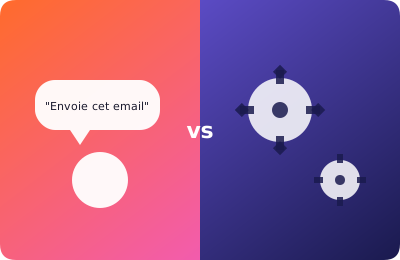
Since we launched Skills at Zelly, a lot of people ask us: "Is it like Zapier?"
Yes and no. Both let your apps communicate. But the experience is nothing alike. Here's the difference.
Zapier: if-this-then-that logic
With Zapier, you set up automations (Zaps) in advance. Each Zap follows simple logic: "when X happens, do Y".
For example:
- When a new lead arrives via Typeform → add a row in Google Sheets
- When an email contains "invoice" → save the attachment to Drive
- When a Calendar event is coming up → send a Slack message
Zapier is powerful for recurring, predictable flows. Once set up, it runs on its own.
The entry cost: you have to configure each Zap up front. Think through the conditions, the data mappings, the exceptions. It's a tool for people who like thinking in flowcharts.
Zelly: conversation as the interface
With Zelly, you configure nothing. You talk to your assistant, and it acts in your apps on demand.
- "Reply to this client confirming the meeting"
- "Find the Dupont contract in my Drive and send it to me"
- "Block tomorrow morning for the quarterly review"
No Zap to configure. No field mapping. You phrase your request in plain language, your assistant understands it and carries it out.
The intelligence comes from the AI, not from a pre-built flowchart.
When to prefer one over the other
Zapier shines when:
- You have a recurring flow that repeats identically
- You want to automate a business process (CRM, marketing, etc.)
- You're happy to configure up front to save time later
Zelly shines when:
- Your requests are varied and unpredictable ("draft this email", "find this file", "summarise this meeting")
- You don't fancy learning a new configuration tool
- You want a conversation rather than a control panel
- You need an assistant that remembers you and adapts to context
They can coexist
Many Zelly users also use Zapier — for automated flows in the background. And they use Zelly for the conversational layer on top, where the human interacts in real time.
Zapier is the factory. Zelly is the assistant by your side.
The last word
If you're looking to automate repetitive processes, Zapier is probably the right tool.
If you're looking for an assistant you can ask things, naturally, like a capable colleague, that's what we do at Zelly.
Try Zelly free for 7 days and make up your own mind.